The starting point
Contracting crossed credit, registration, documents and signing. Manual steps, missing fields and informal workarounds reduced visibility and created rework.
02 · Product Design case study
Raízen Power · Salesforce 360
I led the redesign of the Energy contract workflow inside Salesforce 360, from measuring the problem through operational follow-up after launch.

The starting point
Contracting crossed credit, registration, documents and signing. Manual steps, missing fields and informal workarounds reduced visibility and created rework.
My role
Senior Product Designer. Quantitative and qualitative research, workshops, service blueprinting, information architecture, prototyping, testing and delivery detailing. Figma, Miro, Notion and Typeform.
Lubricants, Fuels and Energy shared a single Salesforce org. Any workflow change could hit three verticals at once, so the design had to solve Energy without breaking the others.
Before designing screens, the work was to measure the problem and make the operation legible to the people who relied on it every day.
A quantitative satisfaction survey with Salesforce 360 users, tabulated by team for a granular read.
Three workshops with Registration, Credit and Integrity, a service blueprint of existing flows and one-to-one interviews with key users.
High-fidelity Figma prototypes on the Salesforce Lightning Design System, with three rounds of unmoderated testing.
Technical refinement with Engineering, user stories with the PO and documentation in Confluence.
Shadowing two key users on launch day, a Power BI dashboard and weekly feedback sessions for a month.
The research that sized the problem and the screen that closed the gap users mentioned most.
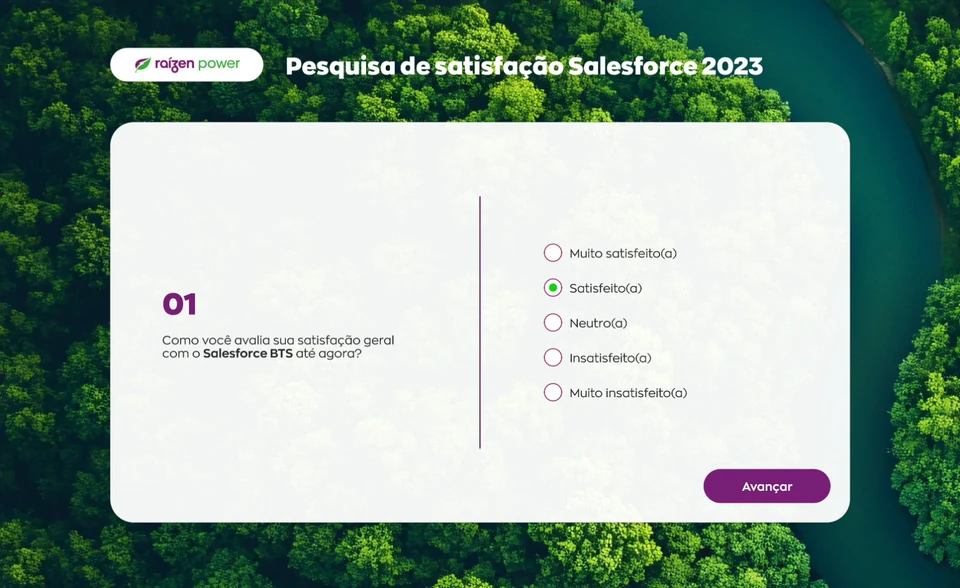
A quantitative instrument run with Salesforce 360 users and tabulated by team.
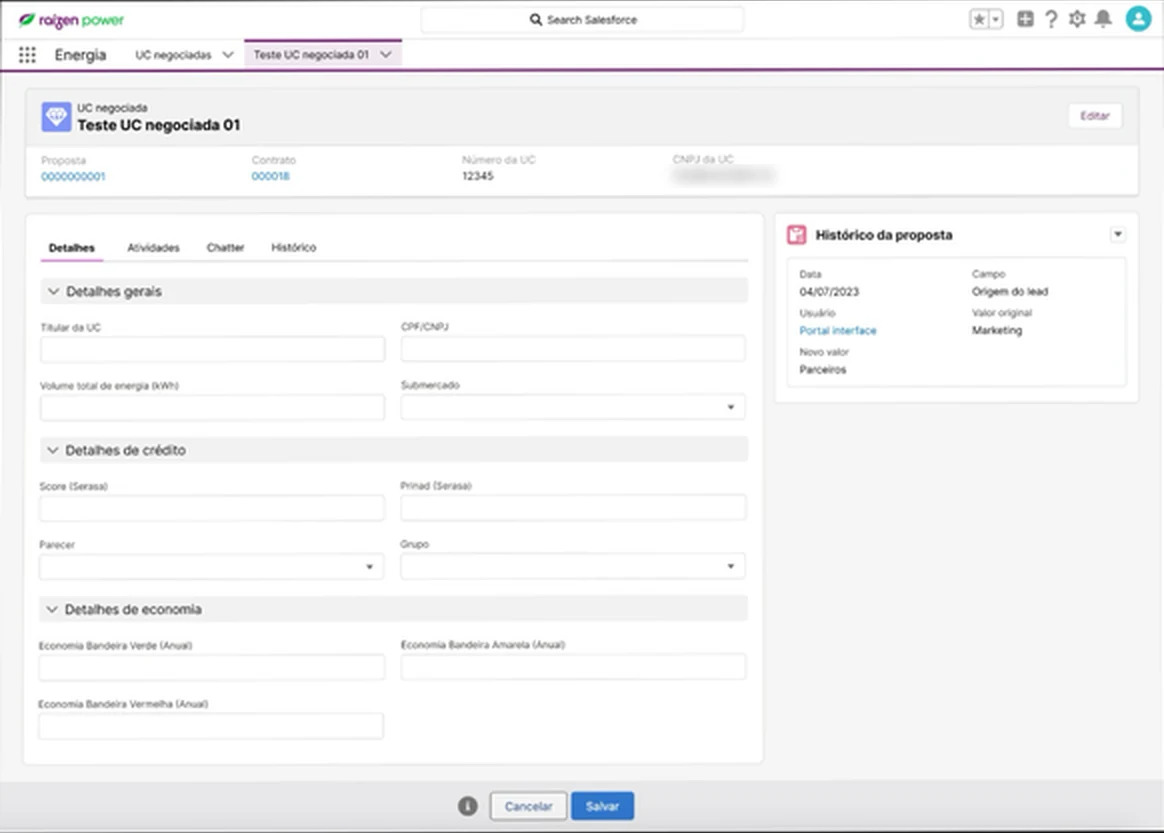
Score and PRINAD gained dedicated fields in the workflow, next to the proposal history.
The solution organised critical information, business rules and next steps so teams could understand what was missing, who needed to act and where each contract stood.
Critical fields and documents visible when they were needed.
Open items, rules and owners brought into the same workflow.
Clear status to move a contract forward before and after signing.
The work did not end with a prototype. Delivery included what the workflow needed to reach production, be observed and evolve through use.
Partnering with Engineering to close behaviours and edge cases.
User stories with Product and acceptance criteria.
Confluence, style guide, interactive flows and specifications.
In-app feedback and a Power BI dashboard tracking adoption and processing time.
The design decision
Rather than creating another layer for the operation to check, I put status, open items and next actions in the environment the team already used.
The workflow reduced manual dependencies and made contracting clearer and easier to follow.
After the Energy operation matured, I led Design on BTS, Back to Standard. The Salesforce org had grown too far and held lead management, opportunities, contracts and live contract operations in the same place.
Available for opportunities
I am looking for teams that treat design as part of product decisions, and companies that need to turn complex problems into better digital products, experiences or operations.